
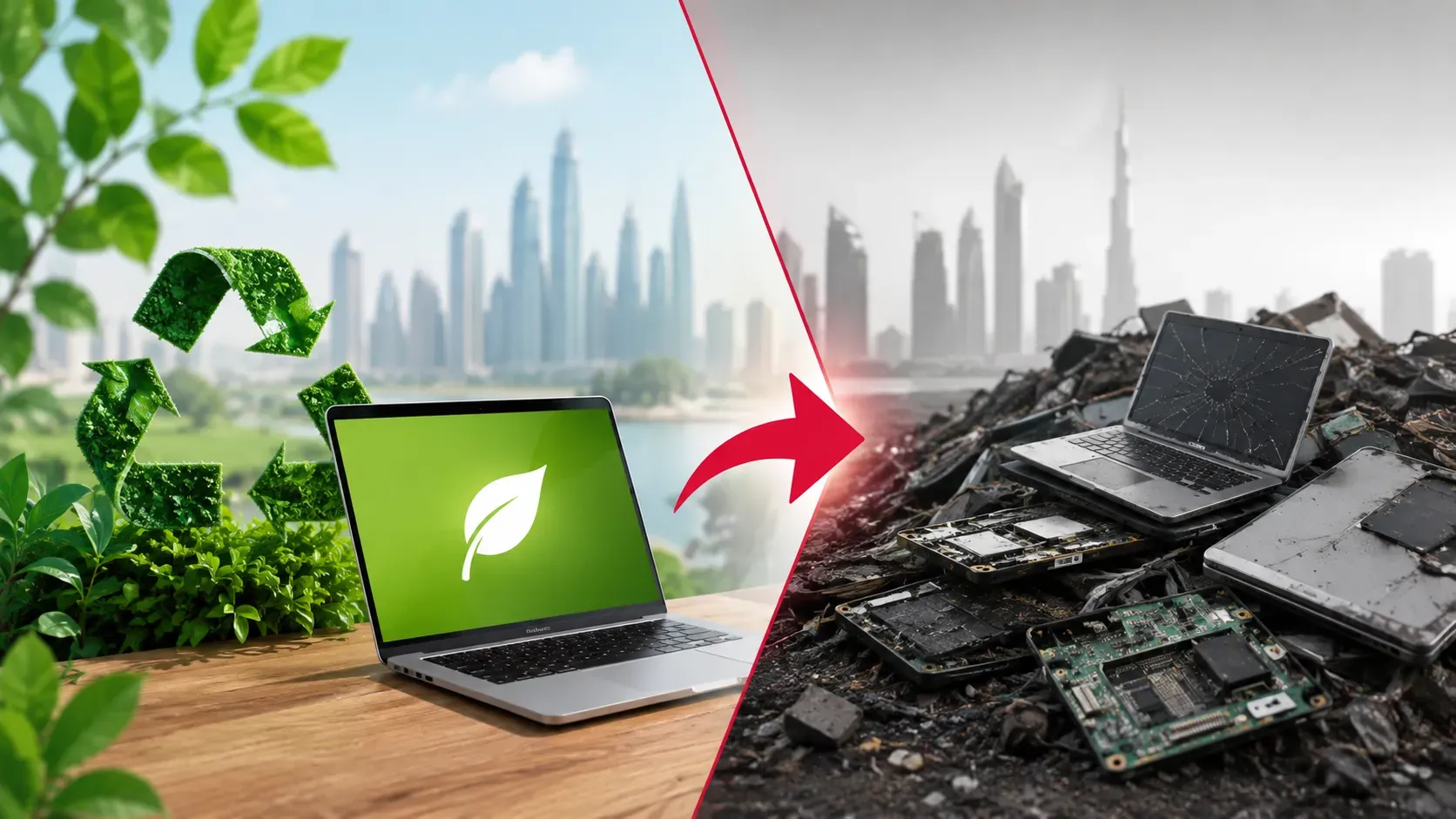
Every MacBook eventually reaches a point where its owner has to decide what to do with it.
For some people, that means upgrading to a newer model and leaving the old MacBook unused in a cupboard. For others, it means selling the device to another user. If the MacBook is no longer functional, responsible recycling may be the appropriate option.
These choices have different environmental consequences.
A working MacBook does not necessarily need to become waste simply because its first owner no longer needs it. Selling or passing it on can extend the useful life of the device, allowing another person to use the hardware that has already been manufactured.
This matters because electronics require raw materials, energy, manufacturing, transportation, and other resources before they reach consumers. Apple itself emphasizes designing products to last, recovering materials, and increasing the use of recycled and responsibly sourced materials as part of its environmental strategy.
For MacBook owners in Dubai, therefore, selling a functional device can be more than a financial decision. It can also be part of a more circular approach to technology.
Quick Answer: Is Selling a MacBook Better Than Throwing It Away?
If your MacBook is still functional and usable, selling or transferring it to another user can generally be a more resource-efficient option than treating it as e-waste immediately because it keeps the existing product in use for longer.
However, selling is not automatically the right choice for every device.
A severely damaged or unsafe MacBook may be better suited to responsible recycling or specialist recovery. The environmentally preferable option depends on whether the device can realistically continue providing useful service.
The basic principle is simple:
Reuse a working MacBook when practical, repair it when worthwhile, and recycle it responsibly when it reaches genuine end of life.
Why Electronic Waste Is an Environmental Concern
Electronic devices contain a combination of valuable materials and components that require proper handling at the end of their lives.
A MacBook contains materials such as aluminium, copper, electronic components, battery materials, and other resources.
When a functional computer is discarded prematurely, the environmental value embedded in that product is effectively lost before the hardware has reached the end of its useful life.
Global e-waste continues to be a major sustainability challenge. Recent reporting has highlighted the loss of valuable materials when electronics are discarded or inadequately recovered rather than kept in productive use or processed through effective recycling systems.
This is why simply replacing an older but functional device every time a new generation appears is not necessarily the most sustainable approach.
Selling a MacBook Extends Its Useful Life
One of the strongest environmental arguments for resale is simple: the MacBook gets used for longer.
Imagine a student buys a MacBook for university and uses it for four years. After graduation, the student upgrades to a newer computer.
The original MacBook may still be perfectly capable of handling:
- Web browsing
- Office applications
- Online classes
- Programming
- Video calls
- General productivity
- Media consumption
- Everyday computing
If that MacBook is sold to another person, the device continues serving a useful purpose.
The second owner does not need an entirely new computer to perform those tasks.
This creates a longer period of use from hardware that has already been manufactured.
Resale Can Support a Circular Technology Economy
A circular economy aims to keep products and materials useful for as long as possible rather than following a simple pattern of manufacture, purchase, and disposal.
Resale fits naturally into this model.
Instead of:
Buy → Use → Discard
the process can become:
Buy → Use → Resell → Reuse → Repair → Recycle
The longer a MacBook remains useful, the more opportunities there are to extract value from the product before its materials eventually need to be recovered.
Apple's current environmental strategy also emphasizes longevity, reuse, material recovery, and the increased use of recycled materials. Its 2026 Environmental Progress Report says the company is working toward circular supply chains and expanding recycled content across its products.
Selling Is Not the Same as Avoiding Recycling Forever
It is important not to misunderstand the environmental argument.
Selling a MacBook does not eliminate the need for recycling.
Eventually, every electronic device reaches a point where repair may no longer be practical and continued use may no longer make economic sense.
At that stage, responsible recycling becomes important.
The environmental benefit of resale comes from delaying the point at which the device becomes waste.
A MacBook that is resold today may eventually be recycled several years later. That is still preferable to unnecessarily treating a functional device as waste while it could have served another user.
What Happens to a MacBook When It Is Recycled?
Responsible electronics recycling involves recovering useful materials from devices so they can potentially return to manufacturing supply chains.
Apple describes material recovery as an important part of its environmental approach and uses specialized technologies and recycling partners to assist with device disassembly and material recovery.
This can help recover materials rather than relying entirely on newly extracted resources.
For example, Apple reports progress in recovering and using recycled materials, including recycled cobalt, rare earth elements, gold, and tin in relevant components and applications.
However, recycling should generally be viewed as an end-of-life strategy, not necessarily the first choice for a MacBook that still works well.
Why Keeping a MacBook in Use Can Matter
Manufacturing a new computer requires a substantial chain of activities before the device reaches its owner.
These can include:
- Raw material extraction
- Material processing
- Component manufacturing
- Assembly
- Packaging
- Transportation
- Retail distribution
Keeping an existing MacBook in productive use does not erase those original environmental impacts, because they have already occurred.
What resale can do is reduce the need for another person to immediately purchase a replacement device for similar computing needs.
That is the key environmental argument for reuse.
It is not that a second-hand MacBook has zero environmental impact. It is that using an existing product longer can make better use of the resources already invested in it.
Repair Can Make Resale More Sustainable
A MacBook with a minor problem should not automatically become e-waste.
Depending on the device and the problem, repair may extend its useful life.
Common issues can include:
- Battery degradation
- Damaged ports
- Keyboard problems
- Screen damage
- Storage or software issues
- Charging problems
Whether repair makes environmental and financial sense depends on the device's age, repair cost, parts availability, and expected remaining lifespan.
Apple also highlights repair, longevity, and material recovery within its environmental approach.
Before disposing of a MacBook because of one issue, consider whether repair or resale to a buyer who can refurbish the device is a better option.
What About a Damaged MacBook?
Not every damaged MacBook should be thrown away.
A device with cosmetic damage may still function normally.
A MacBook with a worn battery may also be repairable.
Even a non-working device may contain components or materials that have recovery value.
The right choice depends on the type and severity of damage.
If the MacBook can be safely repaired and reused, extending its life may be preferable to immediate recycling. If it is beyond economical repair, responsible recycling or specialist recovery may be the more appropriate path.
The important point is to avoid treating every unwanted device as ordinary household waste.
How Dubai MacBook Owners Can Make a More Sustainable Choice
If you are upgrading your MacBook in Dubai, consider the following decision process.
Step 1: Ask Whether You Still Need It
If you rarely use the MacBook, keeping it indefinitely may not provide much value.
Consider whether another person could make better use of it.
Step 2: Check Its Condition
Determine whether the device is fully functional, repairable, or genuinely at the end of its useful life.
Step 3: Consider Resale
If it works properly, selling it can give the MacBook another useful period of ownership.
You can check your MacBook's value in the UAE before deciding whether resale is practical.
Step 4: Consider Repair
If a relatively straightforward repair could significantly extend its life, compare the repair cost with the likely benefit.
Step 5: Recycle Responsibly When Necessary
If the MacBook is genuinely beyond useful repair, look for an appropriate electronics recycling or take-back route rather than treating it as ordinary waste.
Selling a MacBook Can Combine Financial and Environmental Benefits
One advantage of resale is that it can create value for both the seller and the next owner.
The original owner receives money that can help fund an upgrade or another expense.
The second owner gets access to a MacBook at a lower price than buying a comparable new device.
The device itself remains in use instead of immediately entering the waste stream.
This is one reason the second-hand technology market can play an important role in extending product lifecycles.
For owners who have decided to move on from their device, choosing to sell your MacBook in Dubai can therefore be part of a practical reuse strategy, provided the device is still suitable for another user.
How to Sell a MacBook Responsibly
An environmentally conscious sale should involve more than simply transferring ownership.
Before selling:
- Back up your personal files.
- Sign out of your Apple Account.
- Disable Find My and remove Activation Lock where applicable.
- Erase your personal information.
- Describe the MacBook's condition accurately.
- Mention relevant repairs or replacements.
- Include compatible accessories where available.
- Avoid unnecessary disposal of usable accessories.
Accurate information helps the next owner understand what they are buying and reduces the likelihood of the device being returned or discarded because its condition was misrepresented.
What Should You Do With a MacBook That Cannot Be Sold?
If your MacBook has reached the end of its practical life, do not assume that resale is always environmentally superior.
A device with severe liquid damage, major board failure, unsafe battery damage, or extensive physical destruction may not be suitable for normal reuse.
In those circumstances, responsible recycling becomes important.
Apple provides recycling and recovery programs in many markets, and its environmental materials explain how recycling and material recovery form part of its broader product lifecycle strategy.
The objective should be to keep a device in use when it can provide useful service and recover its materials when it cannot.
Key Takeaways
- A functional MacBook does not necessarily need to become e-waste when its first owner upgrades.
- Reselling a usable MacBook can extend its useful life by transferring it to another owner.
- Reuse can make better use of the environmental resources already invested in manufacturing the device.
- Repair can sometimes extend a MacBook's useful life further.
- Recycling remains important when a MacBook genuinely reaches the end of its usable life.
- Apple currently emphasizes longevity, reuse, material recovery, and recycled materials as part of its environmental strategy.
- A damaged MacBook should be assessed before being discarded because some devices can still be repaired, refurbished, or recovered for materials.
- Selling should not be viewed as a replacement for recycling. It is one stage in a longer product lifecycle.
- The most sustainable choice depends on the actual condition and remaining usefulness of the MacBook.
FAQ
Is selling a MacBook better for the environment than throwing it away?
If the MacBook is still functional, resale can extend its useful life and delay its entry into the waste stream. If the device is genuinely beyond practical use, responsible recycling is generally the more appropriate option.
Does selling a used MacBook reduce e-waste?
Resale can help reduce premature disposal by keeping an existing device in use for longer. It does not eliminate e-waste permanently because the MacBook will eventually reach the end of its useful life.
Should I recycle my MacBook instead of selling it?
If the MacBook works well enough for another person to use, consider resale or reuse first. If it is severely damaged or no longer economically repairable, responsible recycling may be more appropriate.
Can a damaged MacBook still be environmentally useful?
Yes. Some damaged MacBooks can be repaired or refurbished, while others may contain components and materials suitable for recovery. The appropriate option depends on the type and severity of damage.
Does repairing a MacBook help the environment?
Repairing a device can extend its useful life and delay replacement, although the environmental benefit depends on the repair required, the resources used, and how long the device continues to be useful afterward.
What should I do with an old MacBook that no longer works?
First determine whether it can be economically repaired or refurbished. If not, use an appropriate electronics recycling or manufacturer take-back route rather than disposing of it with ordinary household waste.
Is buying a used MacBook more sustainable than buying a new one?
A used MacBook can extend the life of an existing device and potentially avoid the immediate manufacture of another computer for the same use case. The overall environmental impact depends on factors including how long the used device remains in service and what happens to the alternative device.
Conclusion
The environmental case for selling a MacBook is ultimately about extending useful life rather than treating technology as disposable.
If your MacBook still works, selling it gives another person the opportunity to use hardware that has already been manufactured. That can help make better use of the materials, energy, and resources already invested in the product.
This does not mean recycling is unnecessary. Quite the opposite. Responsible recycling is an important final stage when a MacBook can no longer provide useful service.
The most sustainable approach is therefore not simply "sell instead of recycle." It is to follow a longer lifecycle:
Use it → maintain it → repair it when practical → resell or reuse it → recycle it responsibly at end of life.
For MacBook owners in Dubai, this approach can turn an upgrade from a simple disposal decision into an opportunity to extend the life of a valuable electronic product.
If your MacBook is still functional and you are ready to move on from it, Sell My MacBook UAE can be one option to explore as part of the resale process.